
You do not need a garden bed to grow tomatoes. A big pot, a sunny patio and steady watering will do it. The two decisions that matter most are the size of the pot and the type of tomato you put in it.
This guide is written for beginners growing tomatoes in pots for the first time, and it covers buying the plant through to picking the fruit.
Choose the right tomato
Determinate, or bush, tomatoes stop growing at a set height, which makes them the easiest fit for a container. Oregon State University Extension calls these smaller types ideal for pots. Look for labels such as “patio”, “bush” or “determinate”.
Indeterminate tomatoes keep growing all season. They will crop in a pot, though they need a larger container and much stronger support.
What you need
- A pot of at least 5 gallons, with drainage holes
- Potting mix (garden soil packs down too hard in a pot)
- One tomato plant per pot
- A cage or a strong stake
- A slow-release fertilizer
Extension guides differ a little on pot size. Illinois lists 3 gallons for standard tomatoes and 1 gallon for cherry and patio types, while Oregon State advises at least 5 gallons and Penn State asks for a 20 inch wide pot. We would go for the bigger end of that range. More soil means a bigger root system and fewer emergency waterings in July.
How to plant tomatoes in a pot
- Wait for warm weather. Tomatoes like heat, so plant out once the risk of frost has passed in your area.
- Find the sun first. Pick a spot with at least 6 to 8 hours of direct sun, and fill the pot there. A full 5 gallon pot is heavy to move.
- Add the mix. Fill the pot partway with potting mix and stir in slow-release fertilizer at the rate on the label.
- Plant deep. Pinch off the lowest leaves and bury the stem up to the next set. Tomatoes grow extra roots along a buried stem.
- Add support now. Push in the cage or stake straight away, while you can see where the roots are.
- Water well. Water slowly until it starts to drain from the bottom.
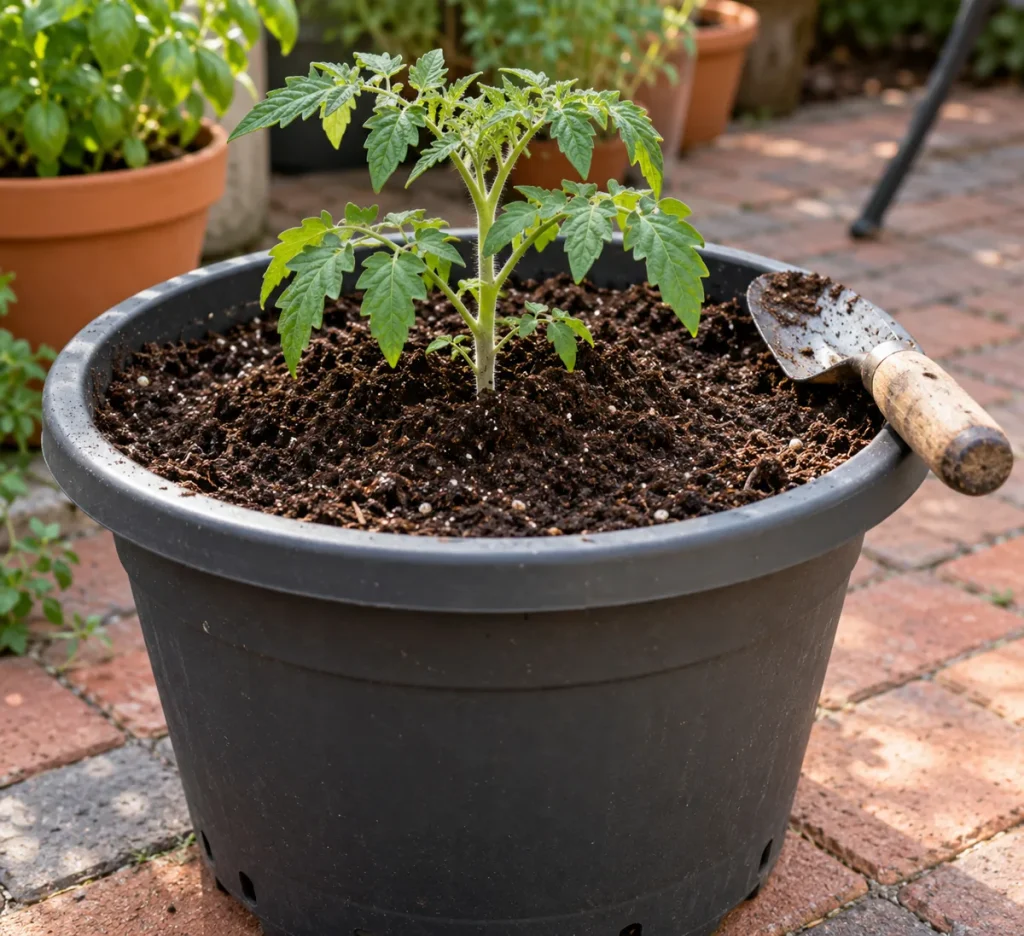
Watering is the whole game
A large plant in a pot can use a lot of water, and most container vegetables need watering at least once a day during hot summer weather. Keep the soil moist but never waterlogged. Check it by hand in the morning, and water until it starts to run out of the bottom.
Try to keep this regular. Letting a pot dry out and then flooding it stresses the plant. If the pot sits in full sun, a light-colored container or a shaded pot side helps keep the roots cooler.
Feeding through the season
All that watering washes nutrients out of the pot, so container tomatoes need more regular feeding than plants in the ground. Penn State Extension suggests a slow-release fertilizer at planting, then a soluble fertilizer every two to four weeks. Follow the rate on the label. The Penn State container vegetable guide covers this in more detail.
Picking your tomatoes
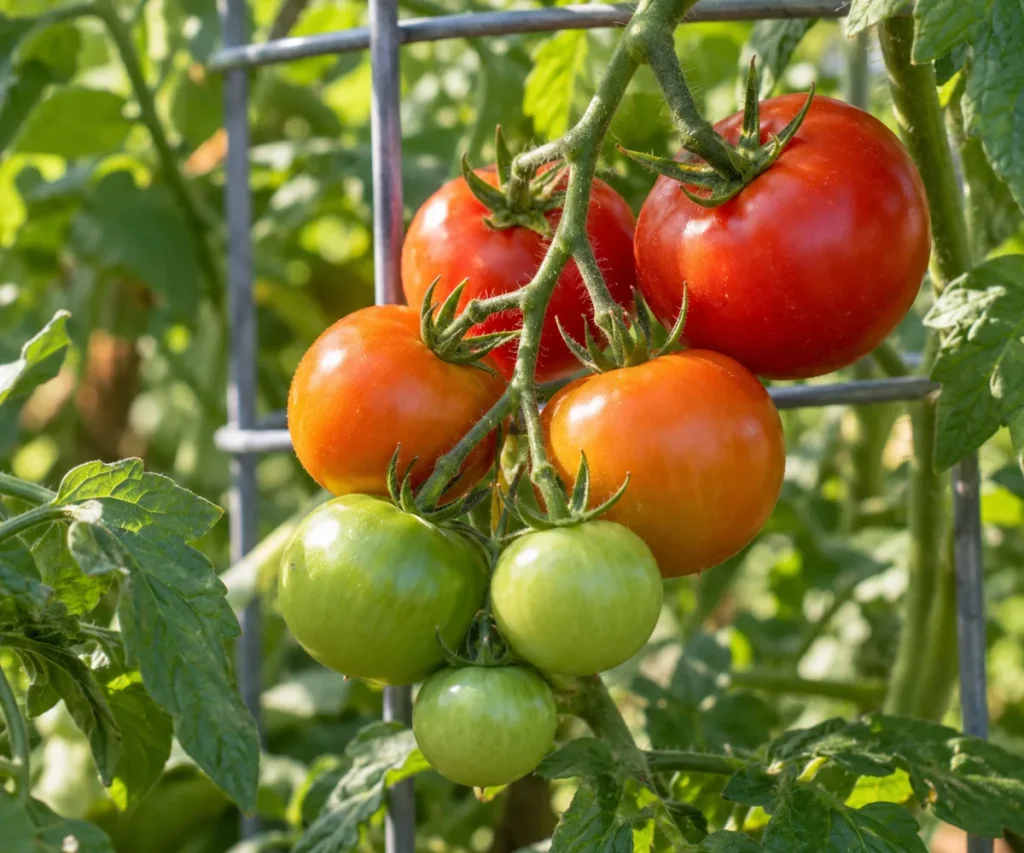
Pick when the fruit has reached its full color and gives slightly to a gentle squeeze. Twist it off or use clean scissors, and keep the rest of the truss on the plant to carry on ripening.
Fill the rest of the patio: learn how to grow basil in pots, build a self-watering coriander pot, or browse all our vegetable guides.
The Kitchen Garden Starter Guide
Our printable guide to growing herbs and tomatoes in pots. Enter your email and download it instantly.
Tomato pot questions
Can I grow two tomato plants in one pot?
Stick to one plant per pot. Two plants share the same water and nutrients, and both will struggle in hot weather.
How deep should the pot be?
Oregon State University Extension suggests at least 12 inches deep for determinate tomatoes.
How much sun is enough?
Aim for at least 6 hours of direct sun. The University of Maryland Extension says tomatoes prefer 8 to 10 hours a day.