
Coriander hates drying out, and it hates sitting in soggy soil just as much. A self-watering pot deals with both by letting the plants pull water up from a reservoir through cotton wicks. You can build one in an afternoon from a plastic tub and a basket that sits on top of it.
This guide is for anyone growing on a balcony, a patio or a small backyard. Coriander and cilantro are the same plant, Coriandrum sativum. Americans usually call the leaves cilantro and the seeds coriander.
What you need for the pot
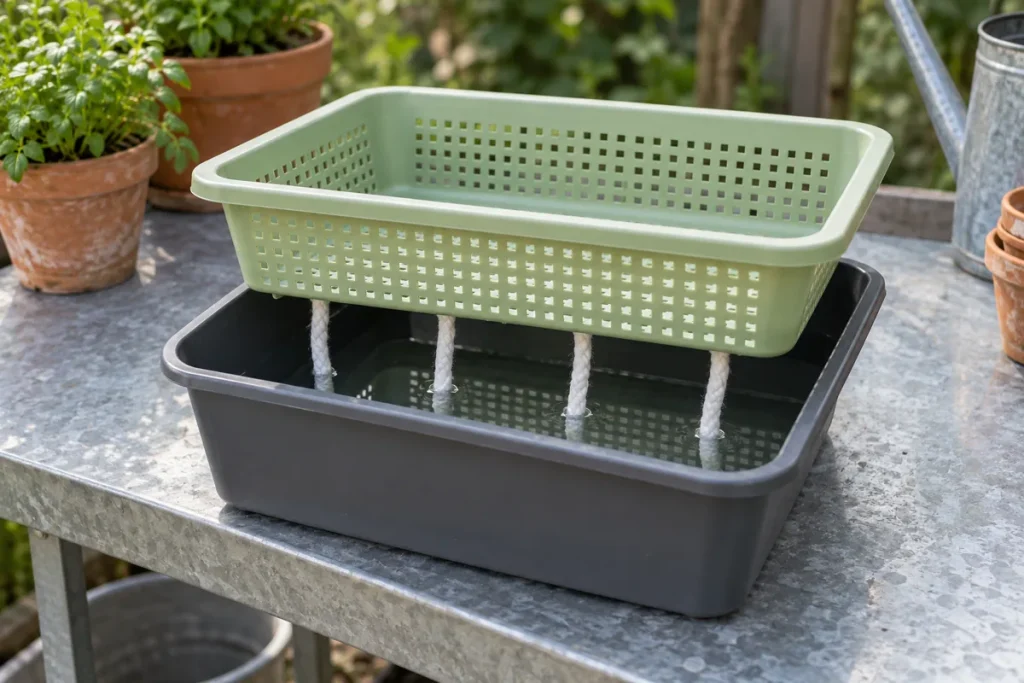
- A plastic container to hold the water
- A perforated basket that sits firmly on top of the container
- Cotton wicks, such as thick cotton cord
- Loose potting mix, with some compost and a little perlite if you have them
- Coriander seeds
Choose a basket with some depth. Coriander grows a long taproot, which is also why it dislikes being moved. Sow it directly where it will grow and skip the seedling tray.
Two things to sort out before you sow
Pick the right moment. Heat and long days push coriander to flower, even the slow-bolting varieties. Sow in the cooler parts of the growing season, and give summer sowings some afternoon shade. Move the whole pot if the weather turns hot. That is the big advantage of growing it in a container.
Check the variety. If you can find one, a slow-bolting type such as ‘Calypso’ or ‘Santo’ will give you more leaf before it runs to seed. Penn State Extension lists ‘Calypso’ as the slowest of the varieties it reviewed.
How to build the pot and sow the seeds
- Set up the container. Rest the basket on the container and check that it sits steady. The basket should stay clear of the water, so only the wicks reach it.
- Thread the wicks. Push the cotton wicks through the base of the basket. One end should rise into the soil and the other should hang down into the reservoir.
- Fill the basket. Add the potting mix and leave it loose. Packed soil holds too much water and leaves too little air around the roots.
- Prepare the seeds. Each coriander “seed” is a small husk that holds two seeds. You can gently crush the husks to split them, though this step is optional.
- Sow. Scatter the seeds over the soil and cover them with a thin layer of potting mix. Water gently from above to settle everything.
- Fill the reservoir. Pour water into the container so the wicks can start drawing moisture up.
- Find the light. Place the pot where it gets around 4 to 6 hours of sun or bright light each day.
Looking after the seedlings
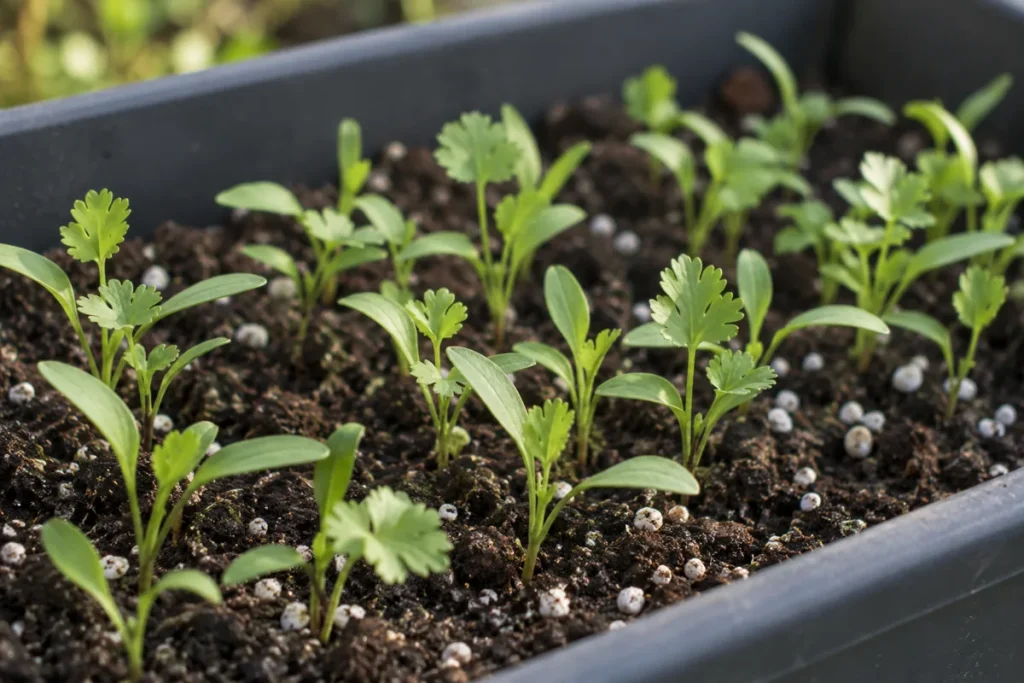
Many herb seeds take 10 to 14 days to come up, so give them time. Keep the surface of the soil damp until you see green, because the wicks reach the root zone first and small seeds sit right at the top.
Once the plants are growing, check the reservoir every few days and top it up when it runs low. Press a finger into the soil as well. It should feel moist, never wet. If it stays soggy, pull one of the wicks out and let the mix dry a little.
Thin the seedlings if they come up in a thick mat. Crowded plants grow leggy and stay short on leaf.
When to start cutting
Start picking when the plants reach about 4 to 6 inches tall. Use clean scissors and take the outer stems first, leaving the center to keep growing. Pick lightly at first, since a young plant needs its leaves.
The slow-bolting variety ‘Leisure’ is ready in 28 to 40 days, according to Penn State Extension, which gives you a rough idea of the wait. Pinch off any flower stems as they appear to keep the plant making leaves for longer.
Coriander does not last long, even in a well-kept pot. For a steady supply, sow a little more seed every 2 to 3 weeks, as the Penn State Extension cilantro guide suggests.
Keeping the pot healthy
A self-watering pot still needs checking. Rinse the reservoir now and then so the water stays clean. Leave a gap between the water and the basket, because roots need air as much as moisture. If you see algae, move the container out of direct sun or wrap it in something opaque.
More for your herb and veg pots: learn how to grow basil in pots, try growing tomatoes in pots, or browse all our herb guides.
The Kitchen Garden Starter Guide
Our printable guide to growing herbs and tomatoes in pots. Enter your email and download it instantly.
Coriander pot questions
Why did my coriander flower so quickly?
Heat and long days are the usual cause. Sow in cooler weather, keep the plants in afternoon shade and choose a slow-bolting variety.
Can I grow it from a supermarket bunch?
Seeds are the better route. The long taproot means coriander does not transplant well, so sow it in the pot where you want it to stay.
What can I do with the seeds?
Let a plant finish flowering and collect the seeds when they turn light brown and the plant has dried, usually 2 to 3 weeks after flowering. Use them as a spice or sow them for the next round.