
Basil in a pot can give you fresh leaves all summer, as long as it gets warmth, sun and regular picking. Most potted basil fails for one of three reasons: the pot is too small, the nights are too cold, or nobody pinches the tips.
This guide covers growing basil in pots from seed or from a young plant, on a patio, a balcony or a sunny step.
What basil needs in a pot
- Sun: 6 to 8 hours a day
- Pot: at least 6 inches wide, with drainage holes
- Soil: a loose, well-drained potting mix
- Warmth: soil of at least 60°F before planting outside
Skip the small 3 inch pots. University of Illinois Extension warns that basil outgrows them quickly, and the roots then dry out between waterings. A bigger pot holds more moisture and gives you a bigger plant.
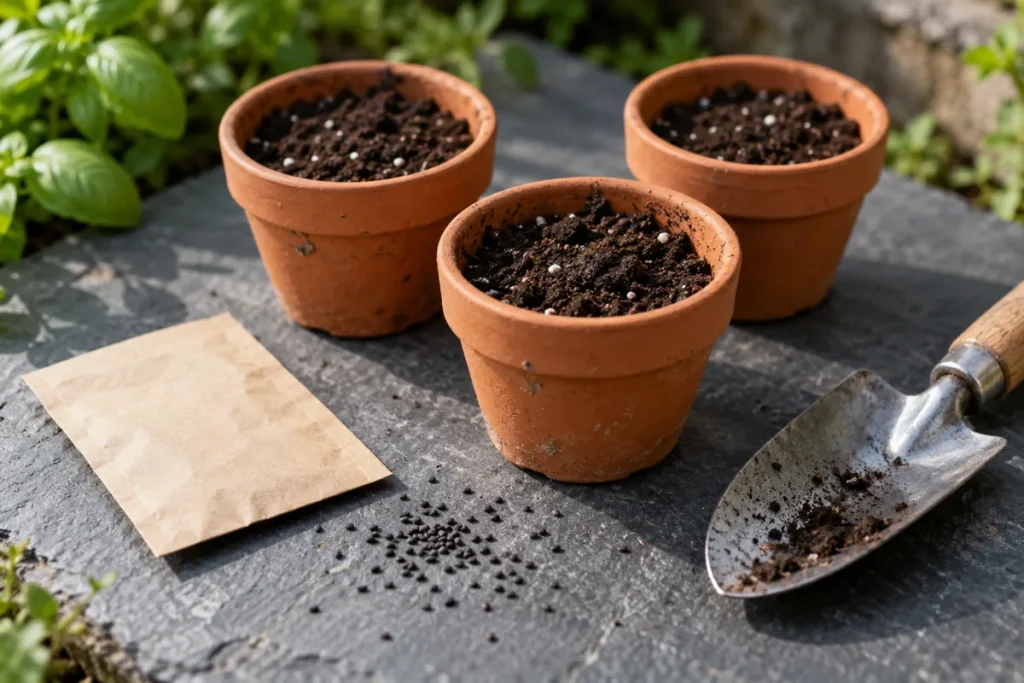
Wait for warm weather
Basil is a warm-weather plant, and this is where early planters lose it. Cold soil and air can stunt growth, and temperatures around 50°F can blacken the leaves. Keep pots indoors until the nights have warmed up. If a cold night is forecast later on, carry the pot inside. That is the easy part of growing in a container.
How to plant basil in a pot
- Fill the pot. Add potting mix up to about an inch below the rim, so water does not run over the edge.
- Sow or plant. Cover seeds with about ¼ inch of soil. For a young plant, set it at the same depth it was growing before.
- Keep seeds warm. Seeds grow best when the mix is at least 70°F and usually sprout in 5 to 7 days.
- Water in. Water gently until it runs from the holes at the bottom.
- Move it to the light. Put the pot in the sunniest spot you have.
The pinch that keeps it bushy
Left alone, basil grows into one tall stem. Once a seedling has six leaves, pinch the top off just above the second pair. Two new shoots will grow from that point, and each of those can be pinched again later.
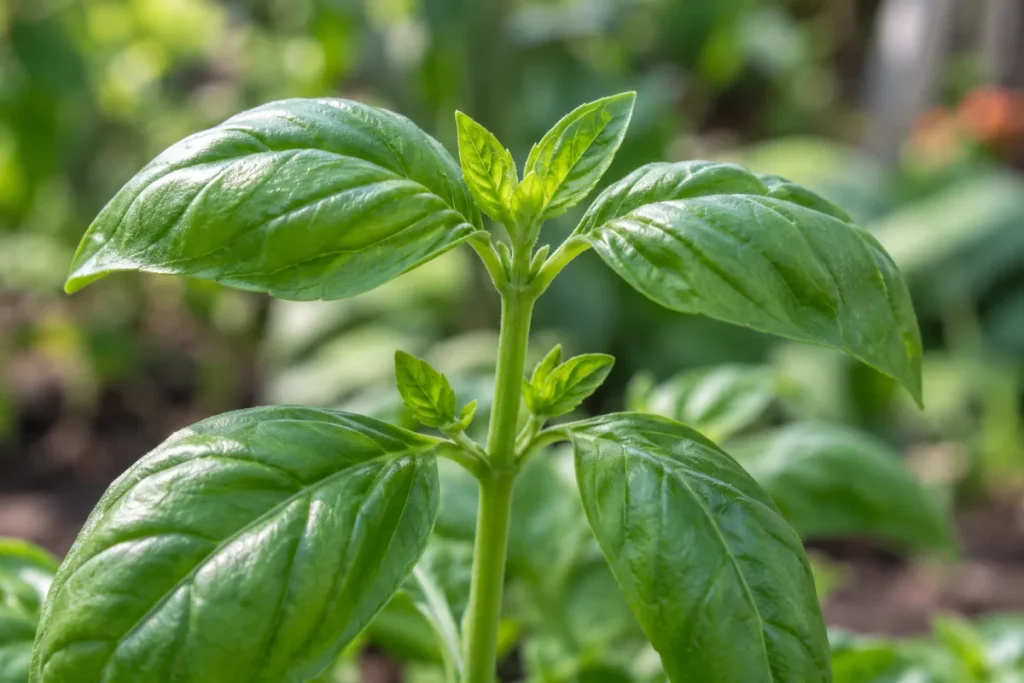
Pick from the top of the plant whenever you need leaves. Taking a few whole tips does more good than pulling off big leaves from the bottom, which are the ones feeding the plant.
Remove flower buds as soon as they appear. Once basil flowers and sets seed, the plant turns woody, stops producing and the leaves become bitter.
Watering and feeding
Pots dry out faster than garden beds, so check them often, and every day when it is hot. Push a finger into the soil. If the top inch feels dry, water until it drains from the bottom. Empty the saucer afterwards so the roots are not left sitting in water.
Go easy on fertilizer. Very rich soil gives you lush leaves with less flavor. University of Illinois Extension suggests a liquid fertilizer every three to four weeks if growth slows down, so there is no need to feed a plant that is already growing well.
You can read more in the University of Illinois Extension basil guide.
Growing more in pots? Build a self-watering pot for coriander, see how to grow tomatoes in pots, or browse our herb guides.
The Kitchen Garden Starter Guide
Our printable guide to growing herbs and tomatoes in pots. Enter your email and download it instantly.
Basil pot questions
Why is my basil turning black?
Cold is a common cause, especially on nights near 50°F. Bring the pot indoors on cold nights and wait for warm weather before moving it outside for good.
Why are the leaves bitter?
The plant has probably started to flower. Pinch off the buds and keep picking from the top.
Should I plant several basil plants in one pot?
Give each plant room to fill out. Penn State Extension describes a container of one foot by two feet, 8 inches deep, as giving a plentiful harvest, so a wider pot is a good choice if you want several plants.